
1) Story from Audrey Zhang - OCSA Branch, California, USAThe OCSA branch was delighted to host its first short-term community drive in February in Cypress Village, Irvine. Over three thousand batteries were donated, which was very exciting to see! Additionally, the OCSA Branch collected from two long-term drives, in which over 500 batteries were accumulated in two separate boxes next to the community pools. This shows the proactiveness of the community to responsibly dispose of e-waste. The OCSA Branch will continue to host both types of drives! 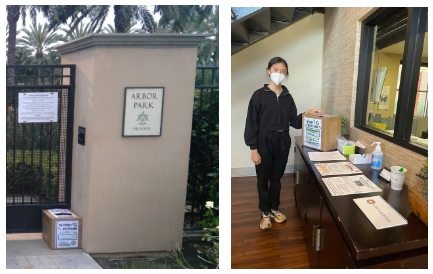 2) Story from Tianchen Zhang - UWCSEA Branch, SingaporeRecently, Tianchen published an informative video detailing Singapore’s methods for reducing e-waste and advocating for responsible e-waste management. Tianchen remarked that the “[Singapore] National Environment Agency (NEA) is the leading public organization…ensuring a clean and sustainable environment for Singapore,” and that “the government has done a really good job.” The NEA runs the Extended Producer Responsibility Framework (EPR), which pushes electronics companies to take responsibility for their products and prevents future e-waste production. One of the ways the NEA has efficiently ensured the program’s success is by placing e-waste collection bins in high-traffic community centers as well as by incentivizing participation in the program with rewards. This has helped encourage public awareness and support, allowing for a strong and effective program. Follow this link to watch Tianchen’s video and other videos in the TAE YouTube channel. [Blurb written by Jacqueline Zhou, TAE Operations Director, on behalf of the UWCSEA Branch] 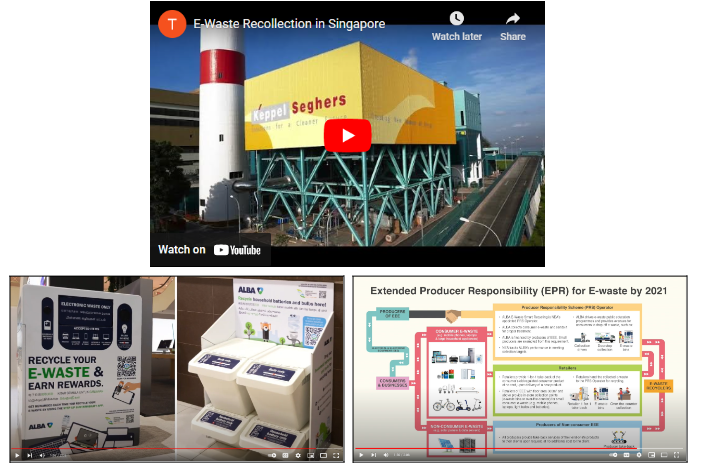 3) Story from Katelyn Gan - Sage Hills Branch, California, USAWe helped Santiago STEAM Magnet Elementary in Lake Forest run a three-week battery drive and drove there and picked up the batteries each Friday. Stacie Aguesse, the Garden Committee Chair at Santiago school, made such a great collection bucket that the elementary kids found it very fun to drop off batteries through the “tunnel” lid (picture below)! Stacie disclosed her brilliant design: “I made it with a bucket lid and an elbow joint from the plumbing department of the home improvement store. I cut a hole into the lid using a knife, then super glued the elbow onto it and caulked around to give it more stability.” The Santiago STEAM Magnet Elementary Battery Drive collected more than 5,600 batteries. “It was a great program that our families really appreciated. Thank you so much, we were overwhelmed with how popular it was!” Stacie told us on our last pick-up trip. We are looking forward to doing it again soon! 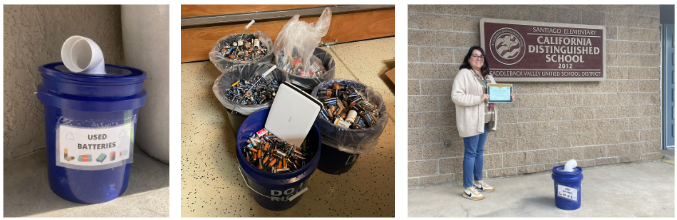 4) Story from Suren Sanjay - University Heights Branch, California, USAOur commitment to the environment at the University Heights Branch continues to thrive as we expand our collection efforts to nearby communities and businesses. Our youngest advocate, my seven-year-old brother, explained to others the hazardous effects of improper battery disposal, inspiring them to take action toward a cleaner and greener world. As a result of his passionate advocacy and outreach, we have successfully implemented monthly collection boxes at three strategic locations, collecting hazardous batteries for safe and responsible recycling. In addition, we are extending our collection to include other types of waste from neighboring businesses, ensuring that more waste is diverted from landfills and safely disposed of in recycling centers. Our community, local businesses, and residents have been invaluable partners in this journey, and we are proud to report that we have collected a few thousands of batteries to date. We are grateful for the ongoing support, and we firmly believe that working together can significantly impact our environment. So, let's continue to strive for a cleaner, greener world for all. 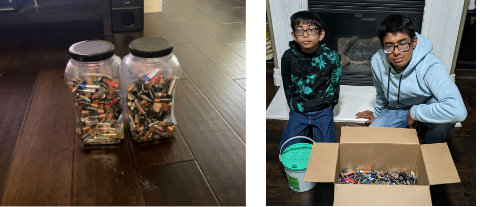 Stories from multiple branches
Formatted by the Communications Committee Tags:
Stories of the 2022 Winning Branches1) 2022 Branch of Year - Lynbrook Branch and President Caroline Wang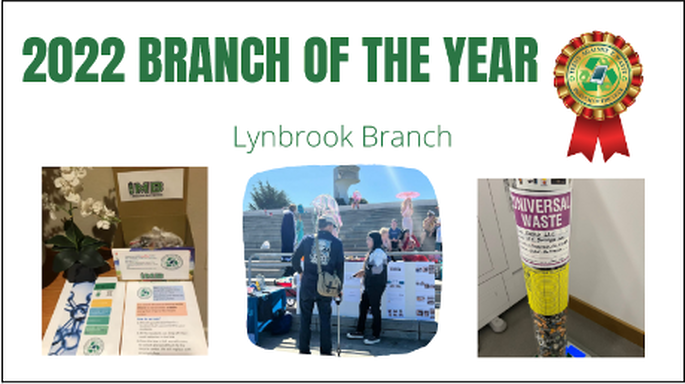 Congratulations to Caroline Wang, the Lynbrook Branch President, for winning the 2022 Branch of the Year award! This award recognizes the branch leader who has received the most Branch of the Month awards throughout 2022. As the branch president and the Assistant Director of the TAE International Outreach Committee, Caroline presented at many events, such as the San Francisco Sharks & Mermaids Parade, Beach Cleanup Event, and Cupertino's annual Earth Day Festival to spread awareness of the issue of e-waste and TAE's initiatives. She also established strong relationships with 5 senior apartments in Downtown San Jose—making battery recycling more accessible to the senior residents—and made great contributions to our 1MB drives with Google at its Mountain View and Sunnyvale sites. In total, Caroline was able to collect over 70,000 batteries throughout the year. We thank Caroline for her unwavering commitment and dedication to TAE's mission and values and enthusiastically congratulate her for recently getting admitted to her dream school, NYU. We wish her the very best in her future endeavors! 2) 2022 Branch of Collaboration - Troy High Branch and President Jacqueline Zhou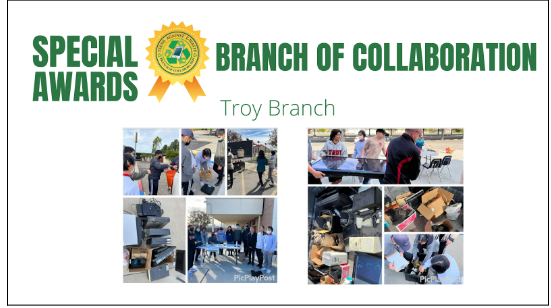 Collaboration has been the key to the success of the global TAE organization, and the Troy High Branch and its president, Jacqueline Zhou, in particular shined in this aspect. In addition to quickly growing to over 50 members, the branch has also recruited 7 other branches to join TAE. Through joint team efforts and collaboration, the branch organized multiple battery and electronic waste collection events in school and neighborhood communities and recycled 5,600 batteries and 1,900 pounds of electronic waste. Jacqueline, serving as the Director of the TAE International Operations Committee, also contributed tremendous efforts by hosting in-depth training sessions and coaching our team leaders with tools and information needed to host successful events. Congratulations to Jacqueline and the Troy High Branch for their collaboration efforts and a successful 2022! 3) 2022 Branch of Dedication - Carmel Valley Branch and President Bryan Huang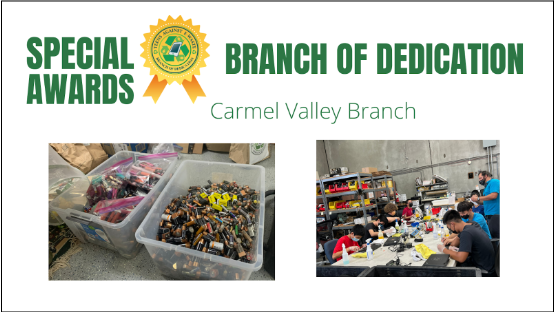 The TAE Carmel Valley Branch and its president, Bryan Huang, have won the 2022 Branch of Dedication award for their efforts in battery/e-waste recycling and community service. The branch held multiple successful collection events in three schools, collecting over 7,000 batteries. Despite facing rejection from a local collection center for their used batteries, they did not give up, but instead reached out to many local government officers to advocate for the implementation of more accessible and convenient battery recycling in their county. Additionally, they have volunteered at an organization called Computers 2 Kids twice a month to refurbish over 11,000 pounds of used electronics for underprivileged communities. Bryan, who also serves as the Assistant Director of the TAE International Communications Committee, has demonstrated his persistent effort and dedication towards a better future. Congratulations to Bryan and the Carmel Valley Branch! 4) 2022 Branch of Outreach - Bellarmine Branch and President Kevin Li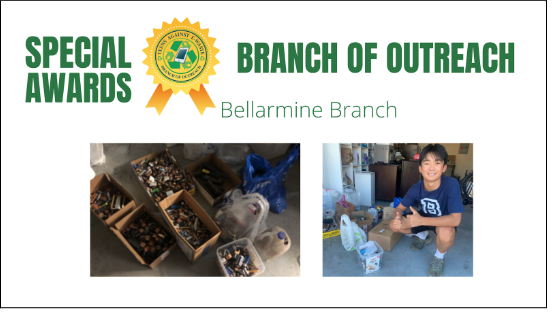 The Bellarmine Branch and its president, Kevin Li, have been awarded the 2022 Branch of Outreach for their exceptional outreach efforts to organizations, companies, and neighborhoods to promote battery collection. They went out their way to reach out in person, exchange emails, and have online zoom meetings to discuss the collaboration possibilities. The branch successfully helped a neighborhood association and a Silicon Valley IT company form official partnerships with Teens Against E-waste, resulting in ongoing monthly collections in 4 collection sites, including a senior center, a senior apartment, and a community center. Kevin also serves as the Assistant Director of the TAE International Outreach Committee and leads his branch to collect 15,000 batteries in 2022 alone. Congratulations to Kevin and the Bellarmine Branch for being a true example of how effective outreach and collaboration can lead to positive change and environmental protection. Branch of the Month Stories5) Story from Suren Sanjay - University Heights Branch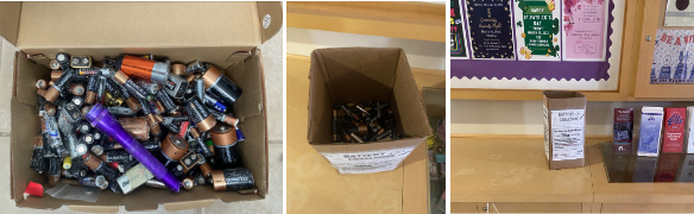 At the University Heights Branch, my brother and I embarked on a mission to collect as many batteries as possible. We kicked off our journey by posting flyers in our neighborhood, describing our mission. After three weeks, we tore out flyers and collected the batteries on mailboxes. We went door-to-door to ensure we collected all, adding even more batteries to our collection. Next, we partnered with a local business, Elks Lodge #1993, to set up a monthly battery collection box. Throughout January, with the support of our neighbors and local businesses, we collected an impressive 1,280 batteries. Our goal is to establish partnerships with as many businesses as possible and promote battery recycling throughout our community. 6) Story from Timothy Bang - Yorba Linda High Branch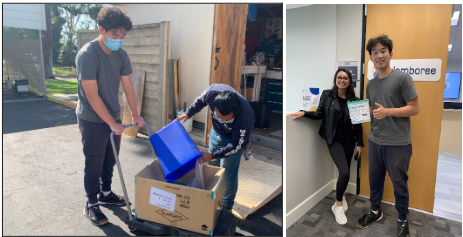 “We had to pay for this.” That’s what Tino, a general manager of a senior apartment said. Tino regularly uses batteries for hearing aids, smoke detectors, and other electronics. However, he has no place to throw away his used batteries and has to pay others to take his batteries. We heard about this and contacted him to help him recycle his batteries, and he was very happy. Through this, I realized my impact on my community. This inspired me to set up other battery locations to where I have expanded to my church, another senior shelter, and am planning to have one in our public library. Due to these efforts, I have been able to collect over 4,000 batteries! But most importantly, I was able to make the lives of other people easier while also protecting our environment. Other Stories7) Story from Joshua Lou - Oxford Academy Branch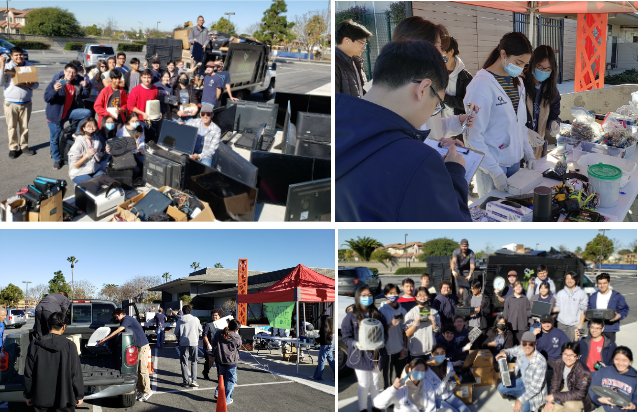 The Oxford Academy Branch co-hosted an E-waste Collection Event with two school clubs in celebration of Martin Luther King Jr. Day of Service. Over 40 student volunteers collected 8,000 batteries and 7,500 pounds of e-waste in three hours on a busy Saturday morning. The branch collaborated with three high school and college districts to raise e-waste awareness among tens of thousands of families while promoting the event. The Oxford Academy Branch is proud to have contributed to such a successful and impactful event and is committed to continuing its efforts to promote sustainability and environmental protection. Stories from multiple branches. Formatted by the Communications Committee. Tags:
1) Story from Jacqueline Zhou - Troy High Branch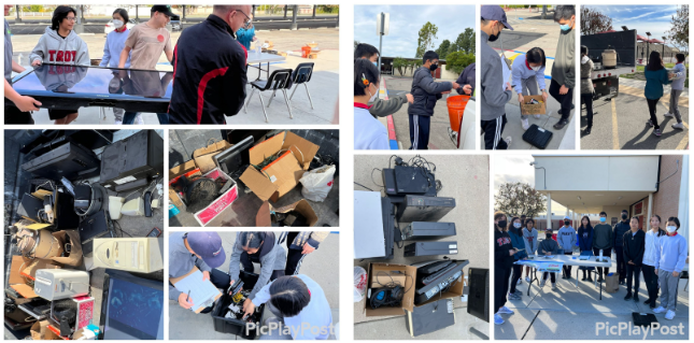 TAE Troy was excited to host our first e-waste collection event (December Give & Share E-Waste Collections) on Saturday, December 17th. During the event, TAE Troy team members partnered with our school NJROTC (Naval Junior Reserve Officer Training Corps) program's volunteers and turned it into a great team effort through collaboration. The event started with a slow pace at the beginning but more and more donations came streaming in as the event went on. Overall, we collected about 1,900 batteries and 1,600 lbs. of e-waste from our school community. This event truly marked the culmination of the Troy Branch's efforts, and ended our successful year with quite a bang. As TAE Troy continues its efforts into 2023, we will definitely be working towards setting the bar higher and continuing our efforts in finding more opportunities for environmental protection! 2) Story from Sophie Saibi - Silicon Valley INTL Branch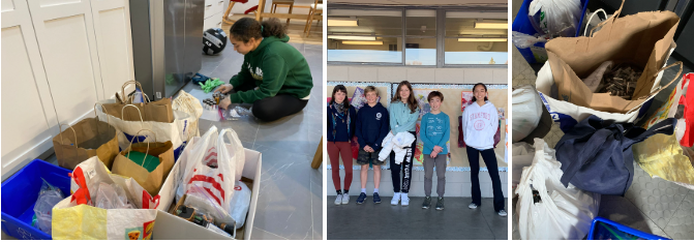 In December, TAE Silicon Valley INTL School Branch hosted a school drive to celebrate World Soil Day (12/5). The event lasted two weeks (12/5-12/16) and we collected a total of 3,048 batteries! We also received batteries from our two permanent collection bins in nearby senior apartments and collected an additional 513 batteries. 3) TAE Holiday Game Night On December 29th, Thursday from 4-5 pm PT (7-8 pm ET), we invited TAE branch leaders to join in on a kids-only game night and have some fun together! We ended up having a great time and played a few rounds of skribbl.io together over a zoom call (congrats to Caroline from the Lynbrook branch for winning!). At the end of the event, we offered a sneak peek of our recently announced TAE New Year's Resolutions Contest—TAE Branches can participate in the New Year's Resolution contest by making a copy of a template/sample resolution (here), provided by the Operations Committee, which will serve as a template for the resolutions. The branch with the best resolution will receive 200 additional TAE points, with second and third place receiving 100 and 50 additional points respectively. If you are interested in participating, you should look over the resolution folder, where there are some great examples of resolutions other branches have made so far. While the initial resolution was due January 14th, we still would like to encourage branches to participate. We will be providing feedback on the resolutions in the next week or so, so make sure to check back soon! 4) Story from Katelyn Gan - Sage Hill Branch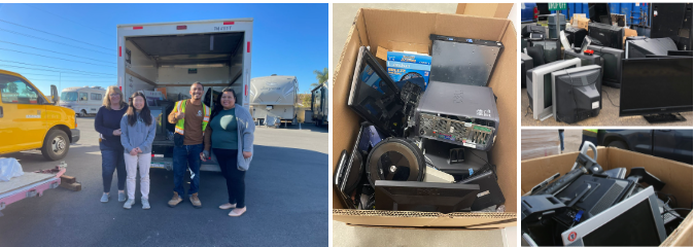 The Sage Hill Branch had a successful December in terms of hosting E-waste events with one at the Meadows on 12/9 and one at Lake Forest on 12/28! The director of the Meadows was really grateful to be working with us on this e-waste collection event since we had worked with them in the past with battery collection and they had a lot of e-waste lying around in sheds and in homes. We collected at least 4 TVs from an outdoor shed filled with dust and exposed to the outside. Overall, we collected and recycled over 3,000 pounds of e-waste and 600 batteries from the Meadows. For the Lake Forest event, the community was really excited for us to be there since we collected 8,000 pounds of e-waste and 220 batteries from the event! 5) Story from Kevin Li - Bellarmine Branch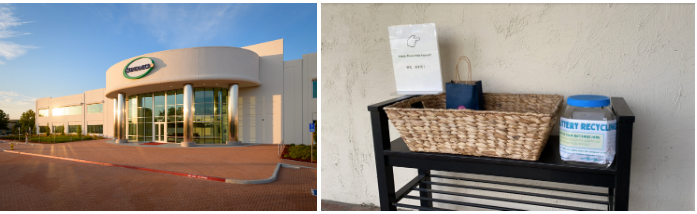 In December, school and tests were in their final stretch. Surprisingly our past outreach effort paid dividends. We got some batteries from a donor company, SuperMicro, and neighbors. During previous neighborhood collections, we left our address to some people and we put a battery collection box at the front door of our house, so they came by and dropped batteries off, too.
Stories from multiple branches Formatted by the Communications Team Tags:
1) Story from David Chiang - Cerritos High Branch, California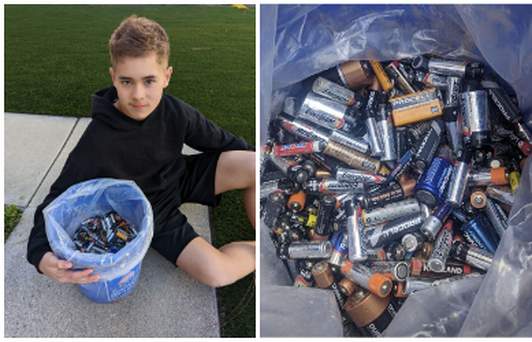 Ever since I have joined Teens Against E-waste, my mom and I have been reaching out towards all of our friends and family. We have been asking them if instead of throwing away their batteries, they might give them to us. We would go to everybody's house and collect the batteries to help preserve and protect our environment. In a couple of months we were able to collect 654 batteries from generous friends and family who also wanted to make a difference and help protect our world. 2) TAE Leaders Met with U.S Congressman Alan Lowenthal to Discuss E-waste Policy Change and Received the Certificate of Recognition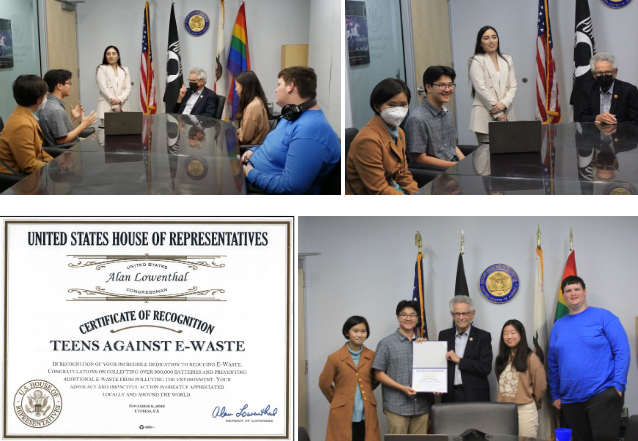 TAE President Joshua Lou, Co-Vice President Katelyn Gan, Cambridge VA Branch President Kevin Waldman, Troy High Branch President Jacqueline Zhou, and Carmel Valley Branch President Bryan Huang met with U.S. Congressman Alan Lowenthal in his office to discuss e-waste policy change. They also received the Certificate of Recognition on behalf of Teens Against E-waste for "collecting over 300,000 batteries" and "advocacy and impactful action [that] is greatly appreciated locally and around the world." Congratulations! Stories written by multiple TAE branches. Formatted into a blog post by the Communications Committee. Tags:
1) TAE Leaders Received the Certificate of Recognition from California State Assemblywoman Sharon Quirk-Silva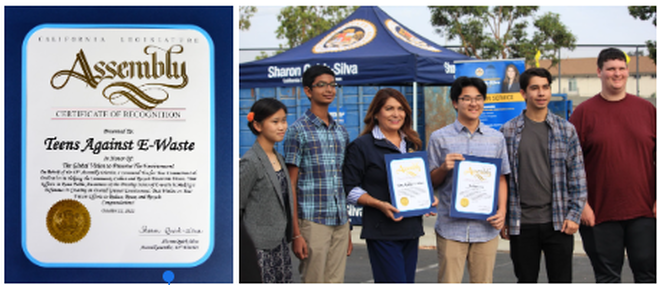 TAE President Joshua Lou led a group of branch leaders (Kevin Waldman, Jacqueline Zhou, Daniel Nicasio, and Mugilan Nambi) to meet with California State Assemblywoman Sharon Quirk-Silva and Buena Park Mayor Sunny Park at the Dump Day Event co-hosted by the California Department of Transportation on October 22nd. They received the Certificate of Recognition on behalf of Teens Against E-waste for our “commitment and dedication in helping the community” and “making a difference in creating an overall greener environment.” Congratulations! 2) Branch of the Month Story from Joshua Lou and Caroline Wang—Oxford Academy and Lynbrook Branches, California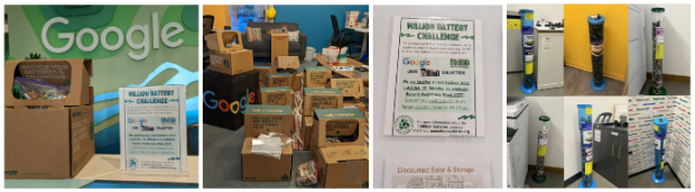 We partnered with Google to run 1MB drives at its Mountain View (headquarters), Sunnyvale, and Irvine sites to celebrate 2022 International Recycle Week! We reached out to and worked with Google’s Environmental Health and Safety managers of the North American region, facility coordinators, and many service teams on seven campuses of three Google sites, covering 38 buildings. Together, more than 70,000 batteries were collected and recycled! Many thanks to Google’s partnership and great contributions to our 1MB campaign for sustainability and a greener planet for all! 3) Branch of the Month Story from John Lee—Rancho San Joaquin Branch, California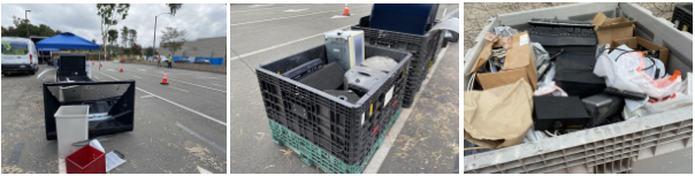 Now that school had started, it was hard to fit in time for collecting batteries. But on 10/22/2022, I still managed to collect over 5 boxes of used e-waste with students of other branches! It was a very hard 5 hours under the chilly weather… but in the end, it was all worth it! I was also able to collect many batteries from my neighborhood. 4) Story from Katelyn Gan, Andy Yuan, and John Lee—Sage Hill, Jeffrey Trail, & Rancho San Joaquin Branches, California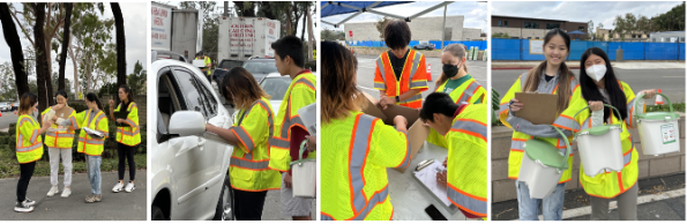 In celebration of International E-waste Day, the Newport Beach E-waste event was held on October 22 and was a great success! As volunteers collecting e-waste, we saw hundreds of cars coming with all sorts of e-waste, from TVs, to chargers, to PlayStations. During the five hours of the drive, the thing we remember the most was how the people who came to recycle kept on saying how we should collaborate with the community more and host more e-waste collection drives, as there was much more e-waste at home that they couldn’t bring on that day. Overall, the collection drive was definitely a success, and it was eye-opening as a volunteer to see thousands of pounds of e-waste being recycled in such a short amount of time. During the 5-hour drive, we collected more than 5,000 pounds of e-waste and 4,000 used batteries. There will be another two similar events in December, one for the city of Lake Forest and one for a senior center in Irvine. We all look forward to them! 5) Story from Grace Gan--Milliken Mills Branch, Ontario, Canada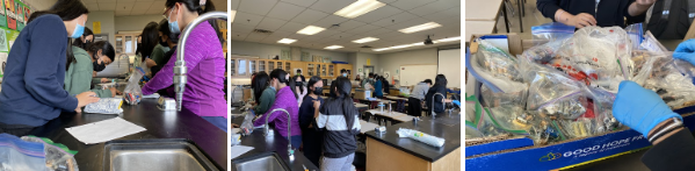 The Milliken Mills branch held its first ever battery collection event in honor of International E-Waste Day from October 3rd to October 14th! This was able to be successfully completed after days of planning between teacher advisors, environment club (Green Inc) executives, social media coordinators, and school administration in late September -- it was amazing to see so many people passionate for this cause. On October 14th, the batteries were organized and counted by student volunteers to total 1,665, the winning student brought nearly 200 herself and won our prize for Dairy Queen ice cream! 6) Here is a video from Siqi Hu--Temma JHS Branch, Japan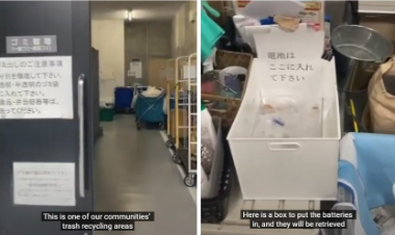 Here is a video provided by Siqi Hu, Founder and President of the TAE Temma JHS Branch in Osaka, Japan, and edited and voice-overed in English by Alen Zhang, the Assistant Director of the TAE Operations Committee. The video showed one of the trash recycling areas of a residential community in Osaka, Japan. The residents are required to separate the waste into categories such as cardboard boxes, glass bottles, plastic bottles (labels must be taken off), other plastics, batteries, and miscellaneous trash. Batteries have their own specific collection box. https://www.youtube.com/channel/UCd58mtoLE7B-jk5oEM7Yo2g - Follow this link to watch Hongyi’s video and other videos in the TAE YouTube channel. Stories written by multiple TAE branches. Formatted into a blog post by the Communications Committee. Tags:
|
